

What is CoView?
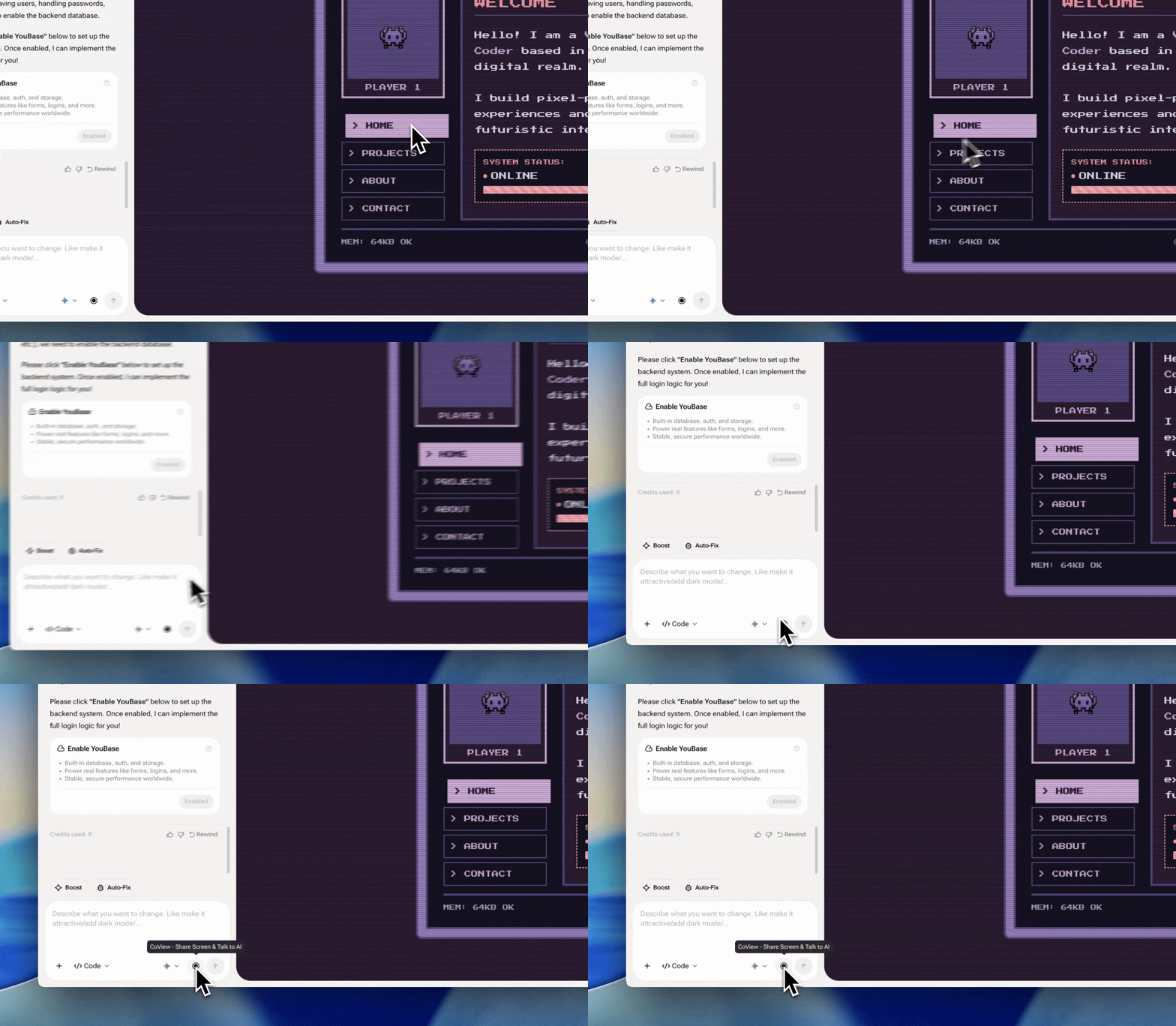
CoView lets you record your screen and speak to show the AI exactly what you’re seeing. Instead of typing descriptions, you point at elements and explain verbally—like sharing your screen with a colleague.Quick Start
1
Click CoView
Find and click the CoView button in the editor toolbar
2
Record Your Screen
Navigate to the issue and hover your mouse over the element
3
Speak
Describe what you want in natural language
4
Send
Stop recording and send—the AI receives video, audio, and visual context together
When to Use CoView
CoView shines when showing is easier than describing:Text vs CoView: A Comparison
Example: Hover animation feels off
Example: Hover animation feels off
Typing:
“The button hover animation has a delay and the color transition isn’t smooth. It’s the blue button in the hero section.”CoView: Hover over the button and say: “Can you make this smoother?”→ AI sees exactly which button, the current animation, and what “smooth” means in context.
Example: Loading state bug
Example: Loading state bug
Typing:
“When I submit the form, there’s a flash of content before the spinner shows up.”CoView: Record the form submission and say: “Fix this flash.”→ AI sees the exact sequence and timing of events.
Example: Spacing looks wrong
Example: Spacing looks wrong
Typing:
“The cards have inconsistent spacing, I think the third one has more margin.”CoView: Point at the gaps while saying: “These gaps are inconsistent.”→ No ambiguity about which cards or which gaps.
Best Practices
One Issue Per Recording
Keep recordings focused on a single problem for clearer communication and faster processing.
Point While Speaking
Move your cursor to the exact element as you describe it—this gives the AI spatial context.
Show the Trigger
If it’s a bug, demonstrate the exact steps that cause it rather than just describing the end state.
Be Conversational
Speak naturally. “This feels clunky” works better than technical jargon.
Combining with Other Features
CoView works well with other YouWare features:Optimizing for Efficiency
CoView is optimized for accuracy, not speed. For simple, clear-cut changes, typing may be faster.
- Simple text changes (“Change the button text to ‘Submit’”)
- Clear CSS values (“Make the header 64px tall”)
- Code-only changes with no visual component
- Anything that requires pointing (“this button”, “that gap”)
- Temporal issues (animations, loading states, transitions)
- Subjective feedback (“feels slow”, “looks cramped”)
How CoView Works
CoView captures three layers of context and sends them to the AI together:Why This Matters
Traditional text prompts lose context:- Ambiguity: “The button” could be any button
- Temporal blindness: AI can’t see animation timing from text
- Spatial guessing: “Top right” is relative and imprecise
Save Credits with Better Communication
Because CoView reduces miscommunication, you often get the right result on the first try:Technical Notes
- Permissions: CoView requires browser permissions for screen recording and microphone access
- Processing: Longer recordings take more time to analyze—keep clips under 30 seconds when possible
- Privacy: Recordings are processed for the current request only and are not stored
Good to Know
- Grant microphone and screen recording permissions when prompted
- Keep recordings focused—shorter clips process faster
- For code-only changes without visual context, typing is often more efficient